


Welcome to RealTime Mandarin, a free weekly newsletter that helps you improve your Mandarin in 10 minutes a week.
Subscribe today to get your fluency back, stay informed about China, and communicate with confidence in Chinese — all through immersion in real news.
In early January, a new app called “Are You Dead?” (死了么) became an overnight sensation in China.
Priced at 8 yuan ($1.10), Are You Dead? topped Apple’s App Store paid downloads chart on January 10, although the app itself had been online for around six months.
It has one function:
Open the app, enter your name, fill in your emergency contact’s email, then check in by tapping that big green button in the centre of the screen.
In doing so, you’ve just made your declaration to the world: I’ve survived yet another day!!
打开,写上姓名,填写紧急联系人邮箱,然后就猛戳中间那个巨大的绿色按钮签到,你就完成了对世界的宣言——我又多活了一天!!
If users miss a check-in for two consecutive days, the app automatically sends an alert email to their emergency contact.
And that's it!
Despite its viral success, Are You Dead? has humble beginnings. It was developed in under a month by three “post-95” (95后) entrepreneurs.
One of the co-founders, Guo Mengchu (郭孟初) explains the backstory:
“Are You Dead?” is our side project, as we all have full-time jobs. The three of us finished it in less than a month during evenings and weekends, and it only cost us 1,500 yuan.
I was responsible for product positioning and feature design, Xiao Han (小韩) did the UI, and Xiao Li (小李) handled app development.
“死了么”是我们兼职做的,我们都有本职工作。三个人利用晚上和周末时间,不到一个月就做完了,成本才1500块。我负责产品定位和功能设计,小韩做UI,小李搞研发。
Related


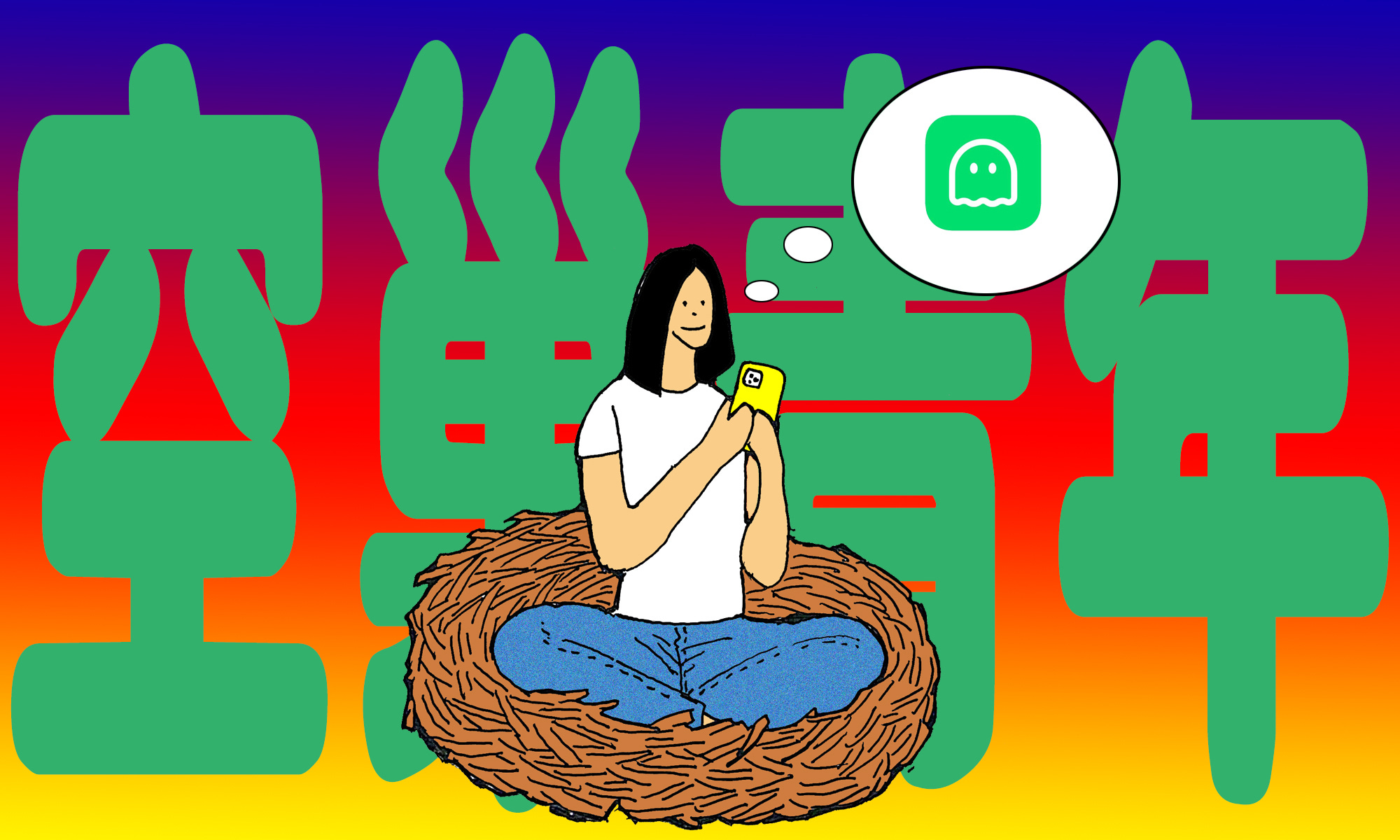
Are You Dead? has struck a nerve with many young people. It’s especially popular with those around or over the age of 25, living alone in Tier 1 and Tier 2 cities in China. These solo-dwellers are often referred to “empty nest youth” (空巢青年).
So, why has Are You Dead? got so popular?
First, is the name itself. It's "taboo" (晦气), and is probably the first product in China with "death" (死) in its name. So this novelty, and the similarity to food delivery platform, Eleme ("Are You Hungry?" — 饿了么), created curiosity, drove attention and generated a buzz.
Second, the app addresses a “fear” (恐惧) which many of its target users have. China now has 123 million solo dwellers, and by 2030, that’s projected to reach 150-200 million. Many of them worry about having an accident at home — or worse, “dying alone” (孤独死) — and not being found. So, Are You Dead? offers a simple solution to calm that angst.
Third is it’s a “lightweight” (轻量) way to keep in touch. Young adults living far from their parents need a way to keep in touch with family and friends back home—without having to actually speak to them too much. This app offers something lighter than WeChat or a phone call, which helps avoid the pressures which phone calls bring, like continuous “marriage nagging” (催婚).
The explosion in popularity of Are You Dead? has also triggered surprising consequences.
Over 60 investors have approached the founders in the last two weeks, pushing the valuation from 1 million yuan ($143,000) to nearly 10 million yuan ($1.4 million).
Then on January 15, the app was removed from China's App Store with no explanation, although current users could still access it. News articles about the removal were largely removed. And when asked about the removal, cofounder Guo Mengchu, also gave no explanation, but hinted at a rebrand using the name of the international version, Demumu.
The buzz around the app drove increased traffic to similar apps aimed at young solo-dwellers in China. Two of the big ones: Shanyan (善言), launched in 2020, saw its user base grow tenfold in one week, and Chaoqi (朝气) said it experienced a huge spike in downloads in the last couple of weeks.
But, unsurprisingly, copycats have also followed.
On January 19, Are You Dead? issued a statement warning that knockoff apps with names like “Are You Alive?” (还活着) were flooding the market, and misleading users with nearly identical branding and functions.
So, is Are You Dead? here to stay, even if it does return with a new name?
Is it a short-lived thing? Or a symptom of a much bigger trend taking place in China?
That’s what we’re exploring this week!
Favourite Five
1. 晦气 huì qì
unlucky, inauspicious
很多人都觉得“死了么”听上去晦气 - For many people, “Are You Dead?” sounds inauspicious. [1]
Related:
气魄 qì pò – boldness, spirit
2. 爆火 bào huǒ
explode in popularity, go viral
“死了么”的爆火在很大程度上,是因为名字起得牛逼? - Did the app “Are You Dead?” go viral largely owing to its badass name? [1]
Related:
火爆 huǒ bào – popular, explosive
席卷 xí juǎn – sweep across
走红 zǒu hóng – become popular
爆发式 bào fā shì – explosive (growth), sudden burst
3. 孤独死 gū dú sǐ
Kodokushi, dying alone
三个95后的副业,被害怕“孤独死”的年轻人捧上热搜第一 - The side hustle of three founders born after 1995 made it to the top of the trending list thanks to young people afraid of dying alone. [4]
Note: originally from Japanese.
4. 独居经济 dú jū jīng jì
solo-dweller economy
“独居经济”的夏天即将来临,抓住独居者的内心恐惧与心理诉求,未来将是独居商业小天才的天下 - The summer of the solo-dweller economy is fast approaching.By tapping into the inner fears and psychological needs of those living alone, those with business acumen will dominate this market segment. [1]
Related:
独居 dú jū – live alone, solitary living
5. 空巢青年 kōng cháo qīng nián
empty-nest youth, youth living alone
我们的用户定位主要是一二线城市25岁以上的独居女性。会选这个群体,是因为现在空巢青年的现象很突出,就是在大城市打拼、独居的青年越来越多 - Our target users are primarily women over 25 who live on their own in first and second-tier cities. We chose this group because the “empty-nest youth” phenomenon is now very prominent—more and more young people who moved to big cities for work are living alone. [4]
Related:
空巢老人 kōng cháo lǎo rén – empty-nest elderly
🎧RTM Podcast Preview
This week on the RTM Advanced podcast, exclusively available to RTM Plus members, we explain phrases which mean “no body knows”…
And the three different ways to use the phrase “dead-alive” (死活).
Hint: two of them having nothing to do with death or being alive!
Can you afford to miss this?!
Tune in at 7 minutes to learn how native speakers use them…
And how you can use them in real conversations right now and show off your amazing Mandarin!
Consuming the Conversation
💡 Ready to get inspired to bridge the gap to real-world fluency? 💡
In every RTM Advanced post you unlock content and tools to inspire you, and help you get fluent.
So, ready to finally get started and wave goodbye to that nagging rusty feeling?
Let’s jump in👇
Consuming the Conversation
Useful words
6. 冒犯 mào fàn
offend, offend someone
而它同时又用“为了关怀独居群体”这样的宣传,来消解冒犯感,赢得大众的包容 - But at the same time, they framed the app as a product for the well-being of those living alone to make its name sound less controversial while gaining public acceptance. [1]
7. 搭子 dā zi
buddy (for activities)
一个人打不了网球羽毛球,有各种社交软件找“搭子” - There are various social apps to help you find a buddy when you want to play tennis or badminton. [1]
8. 签到 qiān dào
check in
这款 App 的功能其实很简单,输入你的名字和紧急联系人邮箱,然后每天签到 - This app is actually very straightforward: enter your name and your emergency contact’s email, then check in every day. [6]
Related:
漏签 lòu qiān – miss a check-in
9. 死活 sǐ huó
life or death, well-being
但这世界上还是有人在意你死活的,知道这件事,能让人好受很多 - But there are still people in this world who care about you, and knowing that makes things feel a lot better. [1]
10. 遗言 yí yán
last words, final message
使用最多的还是签到和预留遗言,这也是我们app最初的功能 - The most-used features are still checking in and leaving a final message, which were the functions we first offered. [2]
11. 赛道 sài dào
track, segment, sector
在监管限制之外,这一赛道还面临创意归属模糊的问题 - Beyond regulatory constraints, this sector also faces issues of intellectual property. [3]
12. 切中 qiè zhòng
hit (the point), address directly
尽管产品功能单一,但“死了么”因名称玩梗和切中独居人士的困境,瞬间引爆社交媒体 - Although the product is simple, “Are You Dea?” took the internet by storm thanks to its playful name and how it directly addressed the struggles of solo dwellers. [2]
Note: 切 is qiè, but often mispronounced as qiē


