


Welcome to RealTime Mandarin, a free weekly newsletter that helps you improve your Mandarin in 10 minutes a week.
Subscribe today to get your fluency back, stay informed about China, and communicate with confidence in Chinese — all through immersion in real news.
A trend has been quietly emerging in China’s employment landscape.
There’s no official English name for it yet. So we came up with one which we’ll discuss below.
This new trend is unlike anything we’ve covered before. It’s nothing to do with the grind of the “side-hustle” (副业), or the soul-crushing feeling of the “office odour” (班味). Nor is it about the resigned self-mockery of calling yourself a “workhorse” (牛马) — one of our top phrases of 2024.
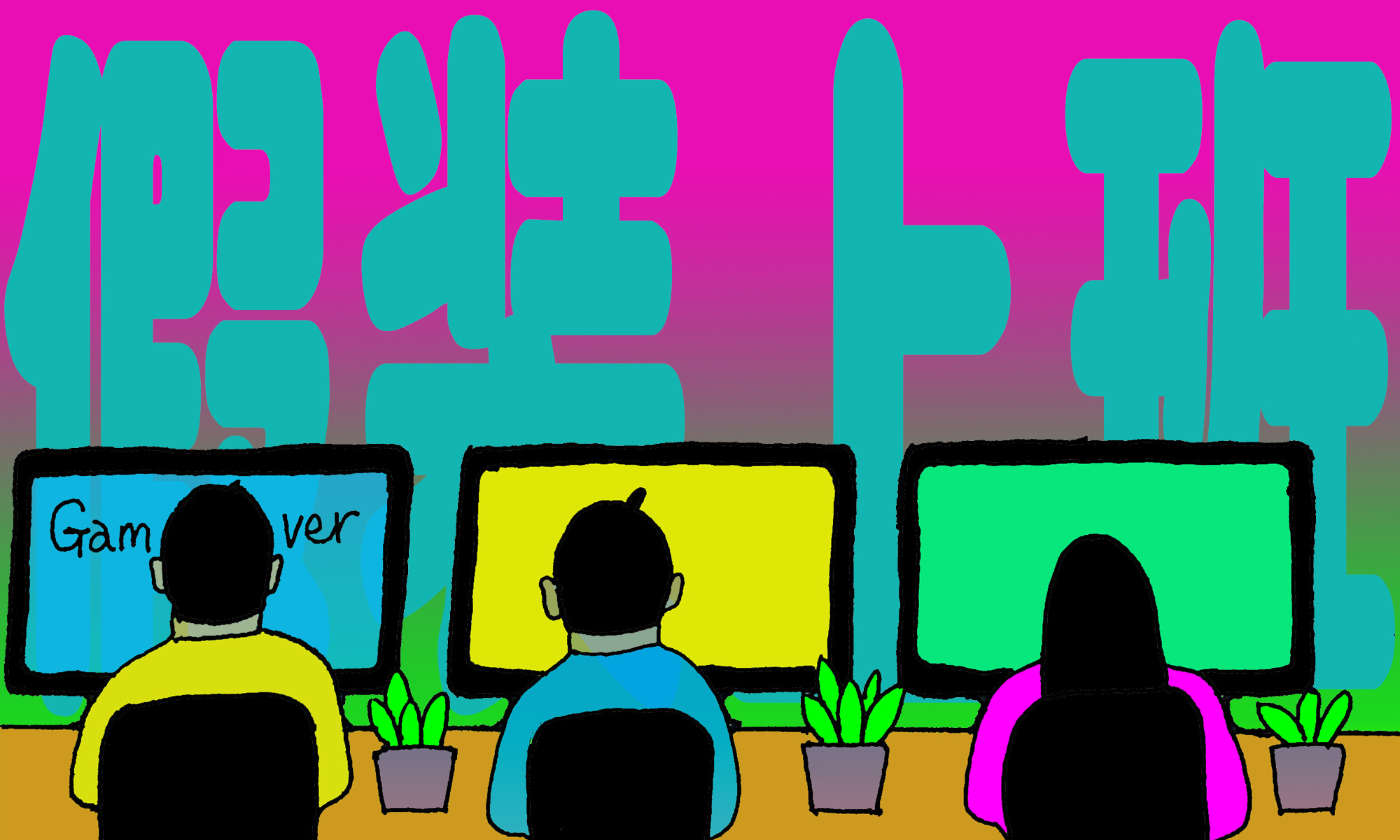
This new trend is totally different. The phrase describing it puts two unlikely words together: “to pretend” (假装) and “go to work” (上班). And since there’s no ready-made English translation for it, we invented one:
The “Mockupation” (假装上班).
This Chinese phrase began surfacing in late 2024, as videos of people documenting their mock occupations spread across Chinese social media.
And, as we’ve discussed many times in this newsletter over the years, whenever a new trend emerges in China, a new business model is never far behind to capitalise on it.
So with the rise of the “mockupation” a new kind of company has begun to appear. These are companies that like any other: large open-plan offices, rows of clean desks, printers, the low hum of a busy working day:
“There are seven or eight coworkers at their desks, each deep in their own tasks, some crunching numbers in Excel, others on sales calls, and a few buried in code.
Everyone is busy with their own work, and people chat occasionally, unlike in a quiet library.”
工位上有七八个同事正在工作,每个人都很忙碌,有人在处理excel表格,有人在打电话沟通业务,还有人在敲代码,大家在忙自己的工作,有时候互相会说说话,不像自习室一样特别安静。
But there’s one big difference.
The people sitting at those desks are not employees. They are customers, paying to be there.
“The pinnacle of professionalism might just be the ability to stay on duty when you have lost your job.
And that commitment has given birth to a new type of company popping up all across the country: Mockupation companies.”
上班的最高境界是什么?或许是:现实已无班可上,内心却始终”在岗”。最近全国各地冒出来了一批新的公司:假装上班公司。
Related


“Mockupation companies” (假装上班公司) have been springing up in cities across China, from Beijing to Shenzhen.
These businesses are mostly repurposed idle office space turned into a new source of revenue by the owners, such as empty desks in showrooms, or spare floors in commercial buildings.
A small desk in a mockupation company is rented out for as little as 100 yuan a month, and a larger one costs around 150 yuan. If you want to work overtime, there’s an additional charge of 10 yuan per hour.
It’s not just office space they provide. Mockupation companies offer “boss patrol” (老板定期巡视) services, with “managers” wandering the floor, so mock employees can experience the feeling of looking busy while doing nothing. And others offer “simulated interview services” (假装面试), which is a performative interview before the “applicant” can “join” the company.
The people who use these spaces fall into several categories.
Many are recent graduates struggling to find work. Others are burned-out veterans from China’s big tech companies using the space as a soft landing after being “optimised” out of a job.
Then there are those who are there purely to keep up appearances with family and friends, trying to avoid the social stigma attached to long-term unemployment.
They’re also popular with entrepreneurs and small business owners who are managing online shops, or building software, who simply need a place to work and make new contacts.
For these people, mockupation companies offer structure, routine, and a psychological anchor of people “coming together to support each other” (抱团取暖).
Which, in the current job market in China, is a much needed relief from the otherwise grim outlook:
“These spaces serve as a layover on one’s journey.
Whether they are graduates looking for their first job or professionals navigating the void of a layoff…
These individuals take a short break here to catch their breath before heading towards the next destination.”
假装上班公司就像人生旅途中的一个中转站。每个来到这里的人都处在生活的某个过渡期——无论是从校园到职场,从失业到就业,还是从一种生活状态转向另一种。他们在这里稍作停留,调整状态,为的是更好地奔赴下一个目的地。
So, will this trend last?
That’s what we’re exploring this week!
Favourite Five
1. 空窗期 kōng chuāng qī
gap period, career break
失业或职业空窗期,不会被视为正常的人生调整,只会被老一辈简单等同于个人的失败与挫折 - For the older generation, temporary unemployment or a career gap is not seen as a chance to recalibrate, but as personal failure and setbacks. [2]
Related:
过渡期 guò dù qī – transition period
缓冲带 huǎn chōng dài – buffer zone
低谷期 dī gǔ qī – rock bottom
2. 形形色色 xíng xíng sè sè
all kinds of, a wide variety of
来的人形形色色,上到五六十岁,下到刚成年 - The people who came were of all ages, ranging from those in their fifties or sixties to those who had just reached adulthood. [1]
3. 虚度光阴 xū dù guāng yīn
waste time, idle away time
只要你仔细观察这些“假装上班族”,就会发现他们都没有在虚度光阴 - If you take a closer look at those who engage in “mockupation”, you’ll find that none of them are wasting their time. [2]
4. 假装上班 jiǎ zhuāng shàng bān
pretend to go to work, mockupation
上班的最高境界是什么?或许是:现实已无班可上,内心却始终“在岗”。最近全国各地冒出来了一批新的公司:假装上班公司 - The pinnacle of professionalism might just be the ability to stay on duty when you have lost your job. Their commitment has given birth to a new type of company that is popping up all across the country: Mockupation startups. [2]
5. 抱团取暖 bào tuán qǔ nuǎn
huddle together for warmth, support each other
他们通过“抱团取暖”重建社会连接,用“自嘲”化解身份转变的阵痛,以微小的经济代价换取一个物理上的“喘息空间” - The unemployed find a collective refuge in “mockupation offices”, where they utilize self-deprecating wit to mask the trauma of their displaced status while paying a small premium for a temporary sanctuary from the pressures of reality. [3]
Consuming the Conversation
💡 Ready to get inspired to bridge the gap to real-world fluency? 💡
In every RTM Advanced post you unlock content and tools to inspire you, and help you get fluent.
So, ready to finally get started and wave goodbye to that nagging rusty feeling?
Let’s jump in👇
Consuming the Conversation
Useful words
6. 副业 fù yè
side job, side hustle
搞副业是祝潇颖眼中体现个人直接能力的方法 - In Zhu Xiaoying’s view, having a side job is the way to demonstrate the direct impact one can create. [3]
Related:
待业 dài yè – unemployed, between jobs
7. 裸辞 luǒ cí
quit without a backup plan, resign before receiving another offer
时间长了,人际交往的压力也越来越大,于是干脆裸辞,靠自媒体带货谋生 - Eventually, the social toll of the corporate life just became too much. So she decided to simply quit her job and pivot to selling products on social media. [1]
8. 瞎忙 xiā máng
be busy for nothing, busy without direction
每天排得满满当当,但是瞎忙,没有主心骨 - Every day is fully packed, but I was just going through the motions and didn’t have a sense of where I was going. [1]
9. 沉淀 chén diàn
accumulate, settle and reflect
一开始大家都是觉得自己不赚钱,想着接下来多沉淀 - At the beginning, everyone felt they weren’t making money, so they believed that they should take time to upskill and hone their craft. [1]
Related:
沉下心 chén xià xīn – calm down, focus oneself
10. 惬意 qiè yì
comfortable, at ease
那这段“上班”时光就更多了几分温暖,自然也更惬意 - This period of “working” thus felt a bit warmer and naturally more comfortable. [2]
11. 摸鱼 mō yú
slack off, goof off at work
然后是“闲聊、摸鱼”,最后一项是“职业规划” - Then comes “chatting and slacking off”, and the last item is “career planning”. [3]


