


Welcome to RealTime Mandarin, a free weekly newsletter that helps you improve your Mandarin in 10 minutes a week.
Subscribe today to get your fluency back, stay informed about China, and communicate with confidence in Chinese — all through immersion in real news.
An unlikely story has been trending on Chinese social media over the last two weeks.
It began when a tourist walked past a hotel in the northern city of Dalian (大连) during the Labour Day holiday.
It was a typical warm May day, the streets were alive with tourists. But as this tourist walked past that hotel they noticed something looked a bit off, but couldn’t quite put their finder on it.
After a second glance, they realised:
“The wind in Dalian is so strong that a stroke of the character for ‘season’ has fallen off…
And the Ji Hotel has become the Li Hotel.”
大连风太大了,“季”字都被吹掉了一撇
The hotel in question looked identical to the Ji Hotel (全季), which is a mid-range hotel chain with over 1,100 locations across China.
The branding, the colours, and the style of the building looked exactly like the Ji Hotel. Apart from from one tiny detail: the character for “season” (季 jì) on the hotel sign had been replaced by the character for the common surname, Li (李 lǐ).
To the untrained or non-native eye, these two characters look the same. The difference is a single stroke (一撇):
“Season” (季 jì) = “grain” (禾 hé) + “child” (子 zǐ)
“Li” (李 lǐ) = “tree” (木 mù) + “child” (子 zǐ)
The Dalian tourist went on to post their findings on Weibo. The image of the Li Hotel soon hit the top of hot search lists. With comments like:
“I had to rub my eyes and look twice at my phone. I thought I was seeing things.”
以为自己眼花了,对着手机揉了半天眼睛
And my personal favourite:
“Do you have to change your surname to Li to check in?”
住这个酒店需要改李姓吗
H World Group (华住酒店集团) is the owner of the Ji Hotel brand, and was quick to distance itself from this imposter. Of the 29 Ji Hotels in Dalian, the “Li Hotel” (全李酒店) was nothing to do with them, apparently.
Social media users across the country began spotting similar hotels with names almost identical to well-known brands.
A Youting Hotel (又庭酒店) was spotted in another city, which looked exactly like the the Hanting Hotel (汉庭酒店). It had the same blue lettering, same horse logo, but the 'water' radical (氵) on the character hàn (汉) was gone, leaving the character yòu (又) instead.
Related


A growing number of fakes emerged:
The Xana Hotel (希岸 xī’àn) morphed into 希堓 (xī’àn) with an “earth” radical (土 tǔ) added to the second character (岸 àn) to make 堓 (àn), which sounds exactly the same.
Hi Inn (海友 hǎiyǒu) became 嗨友 (hāiyǒu) with a “mouth” radical (口 kǒu) added to the second character, “sea” (海 hǎi), to make 嗨 (hāi) which means “hi.”
And the Vienna Hotel (维也纳 Wéiyěnà) transformed into the Weitana Hotel (维他纳 wéitānà) with a “person” radical (亻 rén) added to the middle character (也 yě) to make “him” (他 tā).
So Chinese characters are fertile ground for fake brand names. With a single tweak to a radical in one character of a name, an entirely new almost identical brand is invented.
As you might expect, this is not a new phenomenon in China.
And there are an equally rich number of ways to describe it in Chinese, many of which we’ve discussed before in this newsletter:
“Piggybacking” (碰瓷), or “bumping porcelain,” refers to con artist military men in the dying days of the Qing Dynasty who ripped people off by deliberately bumping into passers-by. They carried fake expensive-looking pots, and when the pots broke due to the engineered collision, the crooks would extort compensation from their victims.
"Knock-offs" (山寨) or shanzhai literally means "mountain stronghold" which is a nod to the bandit camps where outlaws hid from the authorities in the original meaning of the word. The term entered modern usage via Cantonese as a label for small unlicensed workshops producing unauthorised copies, most notoriously in 1990s Shenzhen, where electronics imitation was rampant. Today it covers everything from shanzhai phones to shanzhai hotels like the Ji Hotel.
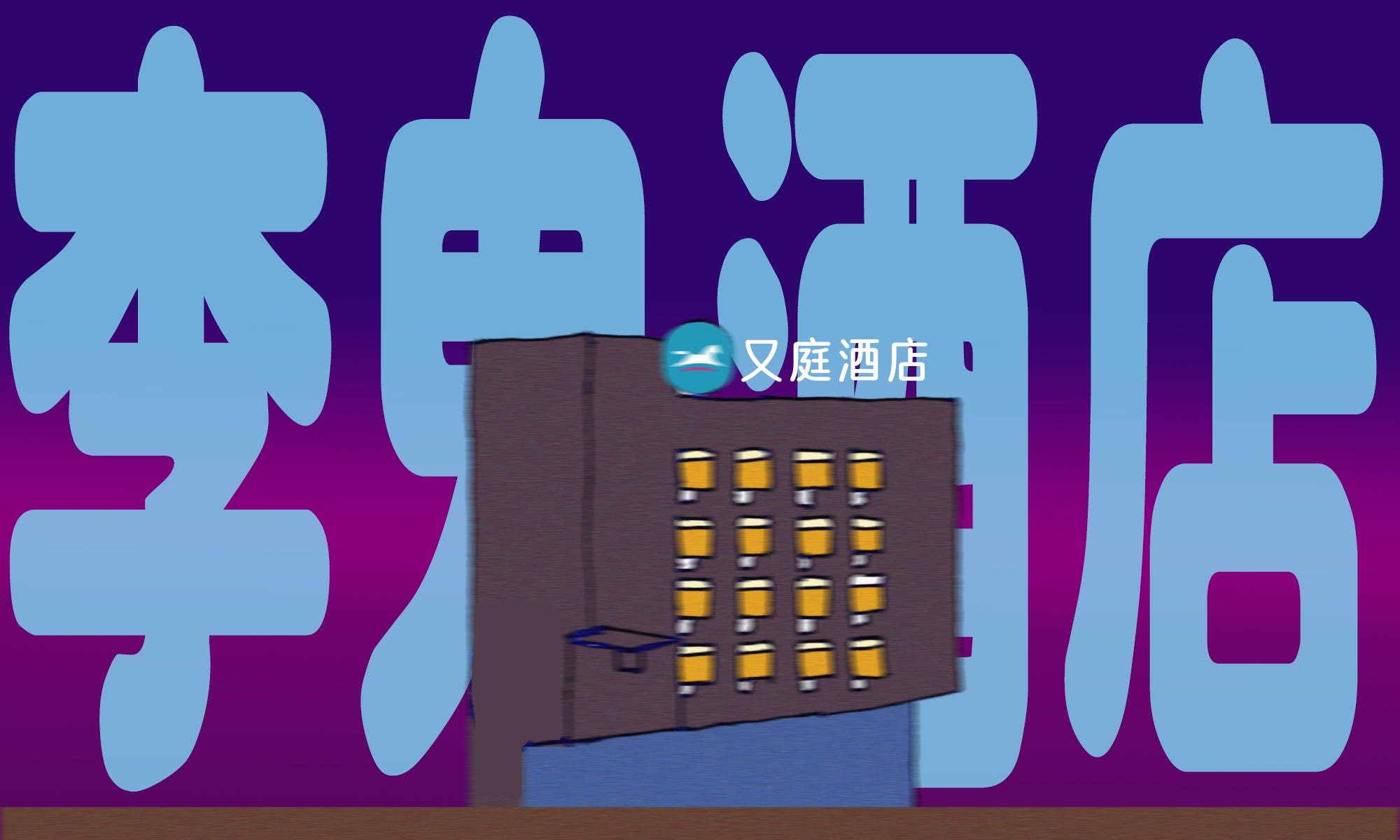
But our favourite is this phrase, which we translate as: "imposter hotels" (李鬼酒店).
This is a reference to a well-known scene in the classic novel, The Water Margin (水浒传), in which a scammer named Li Gui (李鬼) extorts passers-by for cash by pretending to be the infamous and feared bandit, Li Kui (李逵). "Li Gui" has become a common way to describe people or brands posing as well-known names.
Many of these “imposter hotels” have a legitimate predecessor.
The Youting (又庭) Hotel, for example, was once a franchised Hanting (汉庭 ) outlet. While other fakes, like the Li Hotel in Dalian, are simply knock-offs of established brands, like the Ji Hotel (全季) in that case.
So by making minor tweaks to the characters in well-known names, while keeping their appearance intact, these operators create the illusion of still being part of the original chain.
But they can then charge much lower prices than the branded equivalents because they no longer have to pay expensive franchising fees:
The amenities and service were not far off those of a genuine chain.
But at nearly half the price.
曾在改名后的酒店住过,配置和服务与连锁酒店相差不大,但价格便宜了接近一半。
And it’s this which we’re discussing this week!
Favourite Five
1. 山寨 shān zhài
fake, knockoff
最近,多地曝出山寨酒店乱象,令人大跌眼镜 - Copycat hotels have been popping up across the country, which have caught many travellers completely off guard. [1]
2. 傍名 bàng míng
to associate with a famous name, to imitate a well-known brand
“笔画式傍名”的酒店,何以如此之多? - Why are there so many hotels that imitate famous brand names by slightly altering the characters? [3]
3. 换马甲 huàn mǎ jiǎ
to disguise oneself, to rebrand under a different name
殊不知自己住的不是全季,而是“换了马甲”的全李 - Little did he know that he was not staying at Ji Hotel, but at a “rebranded” copycat called Li Hotel. [2]
4. 深藏功与名 shēn cáng gōng yǔ míng
to hide one’s achievements and reputation, to stay low-key
在夜晚,这个“鑫”字还不发光,远远看去就是“汉庭”,像个深藏功与名的替身演员 - At night, the extra character “Xin”, like a stand-in actor quietly hiding in plain sight, remains unlit and allows the hotel to masquerade as “Hanting”. [2]
5. 李鬼酒店 lǐ guǐ jiǔ diàn
copycat hotel, impostor hotel
一场乌龙,却牵扯出不少“李鬼酒店” - A single mix-up has inadvertently revealed a network of impostor hotels. [2]
💡 Want to close the gap between your rusty textbook Chinese and the real thing? 💡
Our RTM Plus membership gives you the tools, resources, and content you need to do exactly that.
Including podcasts, app integrations, and much more.
It’s ideal if your Chinese was once strong but has got rusty, and you want to get your confidence back.
While staying on top of what people in China are actually talking about right now.
With RTM Plus you’ll see an improvement is as little as 10 minutes a day!
Consuming the Conversation
Useful words
6. 碰瓷 pèng cí
a piggybacking scam, to scam by exploiting resemblance
这些“李鬼”酒店专门“碰瓷”知名品牌,在店名和形象设计上和正牌极为类似 - These impostor hotels deliberately imitate famous brands in their names and designs. [1]
7. 高仿 gāo fǎng
high-quality imitation, knockoff
还有人在上海旅游时,住进了高仿桔子酒店的“木吉酒店” - Some travellers in Shanghai ended up in “Ju Hotel”, a blatant knockoff of the well-known “Juzi Hotel”. [2]
8. 推诿 tuī wěi
to shirk responsibility, to pass the blame
一般平台多以“商家自主经营”为由推诿责任 - Platforms often shirk responsibility by claiming that those businesses operate independently. [1]
9. 瞥见 piē jiàn
to catch sight of, to glimpse
瞥见熟悉的“全季”字形就决定下单,结果订完发现,酒店名字是“全李” - He booked the room after spotting the iconic typeface of “Ji Hotel”, only to realise afterwards that it was actually called “Li Hotel”. [2]
10. 隐蔽 yǐn bì
hidden, concealed
比文字颠倒更隐蔽的,是字母造假 - What’s even harder to spot than altered characters is the manipulated alphabets. [2]
11. 乱象 luàn xiàng
Wild West, disorder
今年火爆的“五一长假”出行,也放大了这种乱象 - The travel boom during this year’s May Day holiday also magnified the scale of such scams. [2]
12. 擦边 cā biān
to skirt the line, to exploit loopholes
目前对“改字擦边”行为的执法,仍主要依赖消费者投诉和品牌方主动维权 - At present, authorities still largely rely on consumer complaints and brand-led legal challenges to crack down on these wordplay scams. [2]


