


This week we meet Jiang Fangzhou (蒋方舟) who is a famous writer and media personality in China.
She’s known as the “genius girl” (天才少女) whose mother decided she would become a writer from as early as primary school.
Under these high pressure “tiger mum” expectations, from a young age Jiang’s training regime included waking up every day at 4am to write, and a ban on reading children’s books. When Jiang was seven, her mum even told her it was a legal requirement for every child to publish a book before finishing primary school, or they would be arrested.
The high pressure approach worked. Jiang published her first book at the age of nine, and by the age of 12 was writing columns for Southern Metropolis Daily (南方都市报), making her the youngest newspaper columnist in China at the time.
Jiang was admitted to Tsinghua University for her under graduate degree with a 60-point concession on her gaokao score, which is reportedly the first and only time that has happened.
After a stint as deputy editor of Neweekly (新周刊), a respected current affairs magazine, Jiang went on to take a master’s degree in creative writing at Renmin University (中国人民大学) which she completed in 2019. Since then she’s been a regular guest on TV shows, runs her own culture and media business, and is one of the more recognisable literary personalities in China.
But her reputation is now in tatters following accusations of plagiarism.
The controversy began in August 2025, when Tsinghua professor, Xiao Ying (肖鹰) published a lengthy accusation alleging Jiang’s master’s thesis, The Three Identities of Mary Shelley, contained “serious plagiarism and widespread fabrication” (严重抄袭和普遍造假). In April this year, Xiao formally submitted his complaint to Renmin University, which triggered an investigation.
Related


The story hit social media feeds in early July as the investigation was coming to a conclusion. Under mounting pressure online, Jiang published a rebuttal on July 5. She admitted some “citation irregularities” (引注不规范) in her work, but rejected all accusations of plagiarism.
In a second post, she accused Xiao of “selective whistleblowing” (选择性打假), presuming her guilt from the outset, and then hunting for evidence such as formatting slips to support that narrative:
“If this kind of whistleblowing is allowed to stand, then it is no longer academic oversight, but an instrument of vigilante justice anyone can wield.
Using public scrutiny to settle private scores damages more than my reputation alone. It undermines the credibility of academic oversight itself.”
“如果这样的打假可以成立,那么它就不再是学术监督,而是一件人人可用的私刑工具。把公器用于私怨,损害的不只是我一个人的名誉,而是’学术打假’这四个字的信誉。”
Renmin University were initially supportive of Jiang saying their investigation found no evidence of plagiarism. But a week later, following “new leads provided by netizens” (网友提供的新线索), the university reopened its investigation.
One of those leads came from a Douban user who traced passages in her thesis to a Taiwanese academic journal. Another came from a book blogger who suggested Jiang’s borrowing went well beyond her masters thesis, such as in her 2021 book, The Protagonist (主人公). One essay in that book, according to this online sleuth, closely resembled the work of British historian, Tony Judt, but without referencing it. The blogger describes this kind of plagiarism with the classical Chinese idiom:
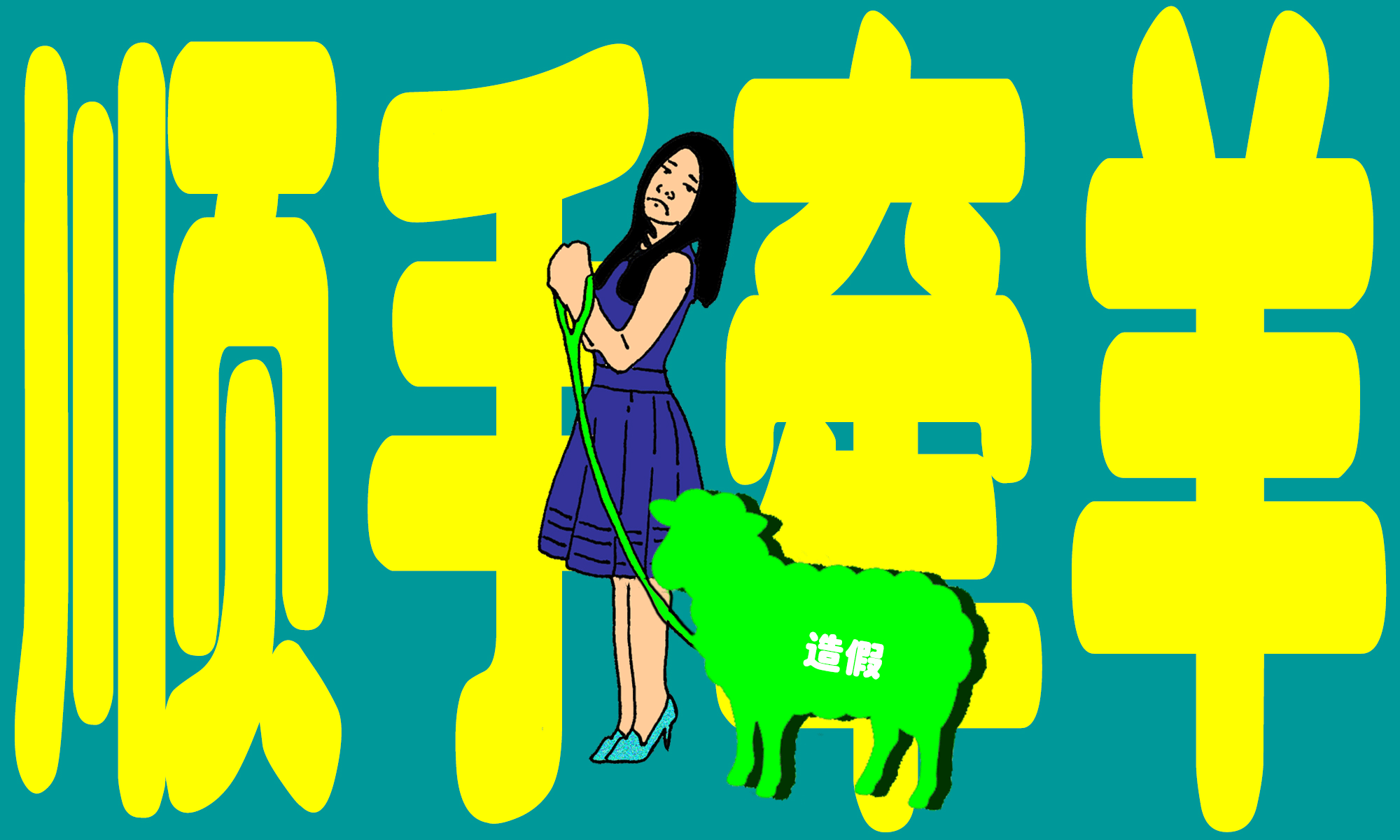
“Leading the goat away in passing” (顺手牵羊)
Which means to steal something opportunistically without being noticed.
Eventually, on July 13 Renmin University reversed its original position on Jiang, confirming she had committed "academic misconduct" (学术不端). A statement said her thesis "overlapped" (重合) with a paper published outside the mainland without citation, and that her master's degree had been revoked.
Jiang issued a full public apology on the same day but the damage was done, as one online commentator put it:
“The carefully crafted ‘genius girl’ image that took Jiang over twenty years to build...
Came crashing down on the night of July 13.”
“蒋方舟用了二十多年精心搭建的那座’天才少女’琉璃塔,在2026年7月13日的夜晚,碎了一地。”
The case has sparked a wider debate in China about the boundaries of plagiarism, which are vague, subjective, and difficult to detect even with software.
Recent studies show academic misconduct in China is shifting from obvious word-for-word copying towards something called “hidden academic misconduct” (隐性学术不端) which can be harder to identify and prove.
One common tactic is lifting ideas from papers published outside of China in English or other languages. And through translation, paraphrasing, and reordering, the copying becomes much harder to detect.
“It takes only a few clicks of the mouse to plagiarise an article, but proving plagiarism often means engaging in an endless wild goose chase.”
“抄袭的人只要动动笔,抓抄袭的人可是要跑断腿的。”
So that’s what we’re exploring this week!
Favourite Five
1. 洗稿 xǐ gǎo
article spinning (to disguise plagiarism)
论文投机者如何绕过学术查重机制,发表抄袭、洗稿的内容? - How do academic opportunists bypass plagiarism checkers to publish plagiarized or recycled content? [1]
2. 开挂 kāi guà
to have an unfair advantage, to be overpowered
一路开挂的人生也有刹车的一天 - Even for someone as unstoppable as she is, life will come to a screeching halt at some point. [3]
Note: internet slang phrases originally from gaming, meaning to use third party software to gain unfair advantage.
3. 学术不端 xué shù bù duān
academic misconduct
该校文学院2019届硕士毕业生蒋方舟,因其硕士论文构成学术不端,决定撤销其硕士学位 - The university decided to revoke Jiang Fangzhou’s master’s degree after finding academic misconduct in her master’s thesis. [1]
4. 异曲同工 yì qǔ tóng gōng
different in form but equally effective, achieve the same result by different means
他在蒋方舟的其他作品中,陆续发现了更多“异曲同工”之处 - He continued to spot uncanny parallels in Jiang’s other writings. [2]
Note: used sarcastically in this context.
5. 顺手牵羊 shùn shǒu qiān yáng
to steal something while the opportunity arises, to pocket something casually
这让我不禁怀疑,多少东西是她自己写的,多少东西是顺手牵羊的 - This made me wonder: how much of it did she write herself, and how much was casually lifted from elsewhere? [2]
💡 Want to close the gap between your rusty textbook Chinese and the real thing? 💡
The RTM Plus membership will help you do just that.
It gives you the tools, resources, and content you need to getg motivated, build a habit, and make real progress.
It including podcasts, app integrations, and much more and is ideal if your Chinese was once strong but has got rusty.
And you want to get your confidence back.
All while staying on top of what people in China are actually talking about right now.
Consuming the Conversation
Useful words
6. 打假 dǎ jiǎ
to expose fraud, to debunk
这是作家中,少见的因学术不端问题被“打假” - This is a rare case of a writer being exposed for academic misconduct. [1]
Related:
造假 zào jiǎ – to fabricate, to falsify
胡编乱造 hú biān luàn zào – to make things up, to fabricate out of thin air
7. 鉴抄 jiàn chāo
plagiarism sleuthing
初代“天才少女”栽在论文鉴抄上,没想到还是被网友锤的 - OG “Prodigy Girl” busted by internet plagiarism sleuths [2]
Related:
抄袭 chāo xí – to plagiarize, to copy someone else’s work
8. 陨落 yǔn luò
to fall from grace, to come crashing down
随着人大的二次通报,天才作家正式陨落 - Following Renmin University’s second official announcement, the once-celebrated literary prodigy fell from grace once and for all. [1]
9. 查重 chá chóng
to check for plagiarism, to run a similarity check
蒋方舟在硕士论文中,有许多刻意规避查重的投机行为 - In her master’s thesis, Jiang Fangzhou resorted to plenty of tricks to game plagiarism checkers. [1]
Related:
降重 jiàng chóng – to reduce the similarity score
10. 蹊跷 qī qiao
suspicious, fishy
让他感到其中必有蹊跷 - It made him feel that there must be something fishy going on. [2]
11. 拧巴 nǐng ba
awkward, conflicted
感觉她处于一个很纠结、很拧巴的状态 - She seemed very torn and conflicted. [2]
12. 才女 cái nǚ
talented woman, gifted female scholar
更是对其一直以来营造的“才女”人设的毁灭性打击 - It was also a devastating blow to the “talented woman” image she had carefully cultivated over the years. [3]
Related:
神童 shén tóng – child prodigy
13. 破格 pò gé
to make an exception, to admit by special consideration
这次破格录取,当然也造成了很大的争议 - This exceptional admission naturally sparked considerable controversy. [3]


