



Welcome to RealTime Mandarin, a free weekly newsletter that helps you improve your Mandarin in 10 minutes a week.
Subscribe today to get your fluency back, stay informed about China, and communicate with confidence in Chinese — all through immersion in real news.
Hengshui High School is one of China’s top schools. It’s located in Hengshui (衡水), a third-tier city of 4.4 million people in rural Hebei Province, about 270km south of Beijing.
In 1992, Hengshui ranked near the bottom of all schools in the province. That changed when a new principal Li Jinchi (李金池) joined the school that year, introducing military-style discipline and relentless exam drilling, requiring students to study over 14 hours daily.
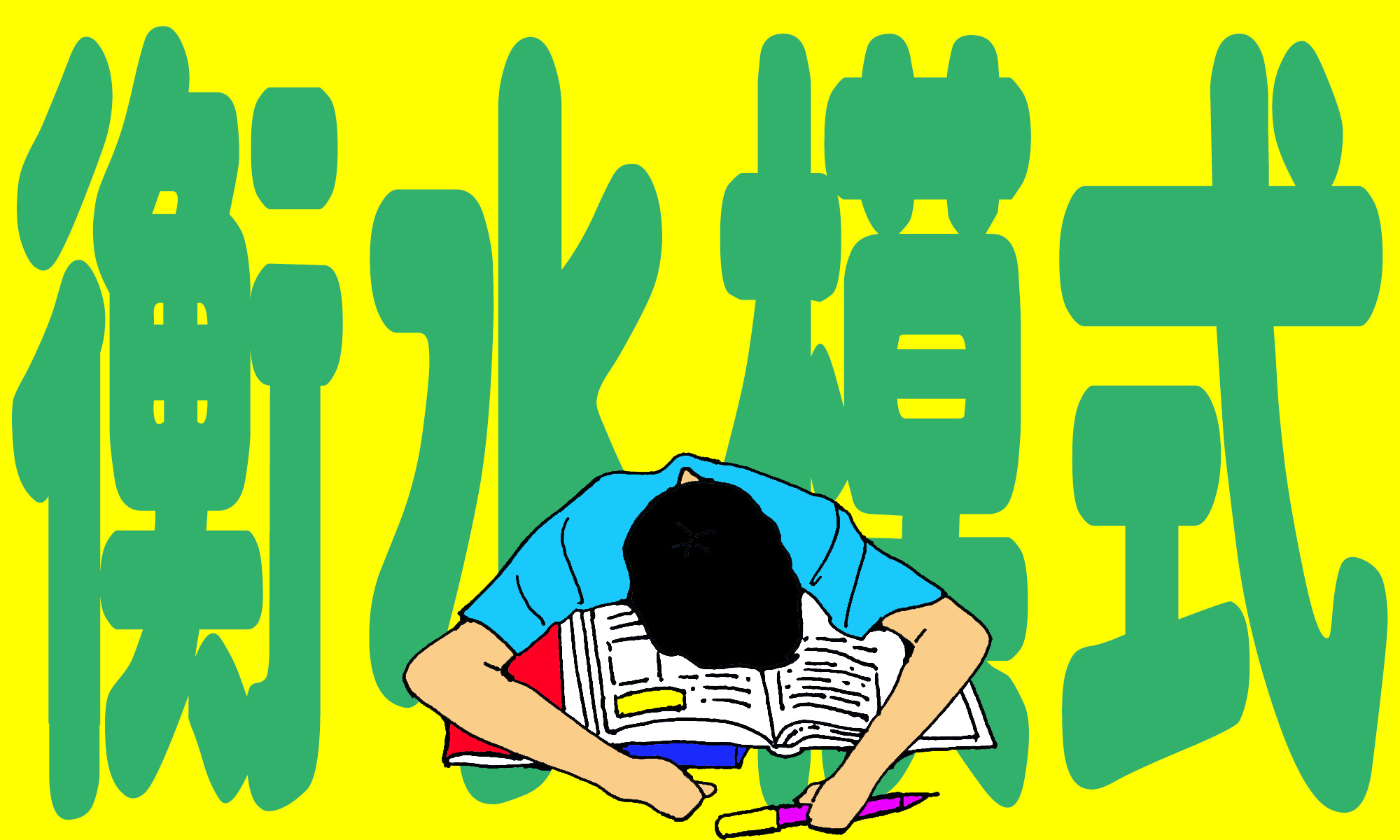
His brutal methods gave rise to new phrases now widely used in China’s schools: “sea of questions tactics” (题海战术), which is drilling students with endless practice tests; the “zero head-raising rate” (零抬头率) where students are forbidden from lifting their heads during self-study; and the “Hengshui step” (衡水步), describing how students must run to the toilet and back during breaks to keep up with their intense schedules.
By 1995, Li had transformed the school. By 2000, Hengshui topped Hebei’s exam rankings, a position it’s held ever since.
The term “Hengshui model” (衡水模式) emerged in Chinese media as the school’s success attracted national attention. Initially celebrated as proof that a poor rural school could compete with elite urban institutions through discipline and hard work, Hengshui has since sent disproportionate numbers students to China’s top universities.
At its peak in 2019, 275 Hengshui students were admitted into China’s top two universities, Tsinghua (清华) and Peking University (北大), out of just 279 total spots allocated to the whole of Hebei Province.
As the school’s fame grew, it began recruiting beyond its local area. A policy known as “cross-district recruitment” (跨区域招生) allowed Hengshui to pull top students from across Hebei Province and even neighbouring provinces, vastly expanding its talent pool.
This created a self-reinforcing cycle: cherry-picking top students maintained extremely high university admission rates, which in-turm attracted more parents willing to pay whatever it took to send their children there.
This brand appeal evolved into a ruthless business—the “super school” (超级学校) model.
Starting in 1999, Hengshui partnered with real estate developers and private investors to open more schools. By 2013, it was a fully commercialised franchise operating across China, with over 30 Hengshui-branded schools in 11 provinces, charging high fees.
Related


But in recent years, Hengshui admissions to top universities have collapsed.
In 2025, Hengshui sent just 45 students to Tsinghua and Peking — only 20% of its 2019 peak.
Numbers began falling after restrictions on cross-district recruitment were introduced in 2018. The 2021 “Double Reduction Policy” (双减政策) further levelled the playing field, and by 2024, cross-district recruitment was banned entirely.
This ended Hengshui’s practice of cherry-picking the province’s most talented students, prompting many in the media to ask:
“What happened to Hengshui High School? How did the once-glittering Hengshui model suddenly lose its magic?”
衡水中学怎么了,曾经金光闪闪的衡水模式怎么突然失去了魔力?
Critics have long argued the “Hengshui model” inflicted huge damage on China’s education ecosystem.
By monopolising top students, and forcing other schools to compete against its unfair advantage, it made the system even more elitist and competitive.
Critics also point to the immense pressure on students. In severe cases, this has resulted in self-harm and suicide—like the 2022 death of Hu Xinyu (胡鑫宇), a 15-year-old at a middle school in Jiangxi Province with a similarly draconian approach.
In January 2023, a social media post by a Hengshui student went viral. The author claimed to be a student “on leave due to depression” (抑郁问题处于休学阶段), listed numerous abuses at the school: teachers physically punishing students, discriminating against under-performers, and verbal abuse. The school has since said it implemented changes.
The Hengshui model’s rise and fall reveals a fundamental truth: its success was never about intensive teaching methods—it was about monopolizing the best students and commercializing the formula.
As one social media comment put it this week:
“Elite schools thrive on selective recruitment.
Their reputations are built on securing top students. Without a strong stream of high achievers, even the most capable teachers can only do so much.”
没有掐尖哪有什么名校?优秀的生源才是名校的法宝,没有优秀的生源,再牛的老师也没用。[1]
So that’s what we’re exploring this week!
Favourite Five
1. 神话 shén huà
myth, legendary success
没了跨区招生,衡水中学的神话立刻就破灭了- Without the ability to recruit students from other provinces, the success story of Hengshui unravelled immediately. [4]
Related:
神迹 shén jì – miracle
封神 fēng shén – to become legendary, to gain god-like status
2. 掐尖 qiā jiān
to pick the best, to cherry-pick
其实就是因为这些年衡水不再全国到处掐尖了 - The reason behind it is that Hengshui has lost its ability to handpick students from all over the country in recent years. [1]
3. 尖子生 jiān zi shēng
top student, high achiever
尖子生集中于少数学校会导致普通中学的成绩下跌 - When most top performers go to the same schools, it leaves other schools struggling to maintain standards. [4]
Related:
民办 mín bàn – private (school)
生源 shēng yuán – student sources, enrollment base
4. 衡水模式 héng shuǐ mó shì
the Hengshui model
衡水中学怎么了,曾经金光闪闪的衡水模式怎么突然失去了魔力? - What happened to Hengshui High School? How did the once-glittering Hengshui model suddenly lose its magic? [4]
Related:
衡水步 héng shuǐ bù – hengshui step (quick walk to the toilet due to short breaks)
零抬头率 líng tái tóu lǜ – zero head-raising rate (students keeping heads down while studying)
5. 一将功成万骨枯 yí jiàng gōng chéng wàn gǔ kū
one general’s success is built on the bones of thousands; great success comes at a heavy cost
掐尖行为会加剧教育不公,进而导致普通中学越来越弱,马太效应下“一校功成,百校枯” - Cherry-picking top students only deepens educational inequality, leaving ordinary secondary schools increasingly weakened. It is the Matthew Effect at play, where the success of one school comes at the expense of many others. [4]
Related:
强者恒强 qiáng zhě héng qiáng – the strong stay strong
穷则思变 qióng zé sī biàn – when things are bad, one seeks change
🎧RTM Podcast Preview
This week on the RTM Advanced podcast, we explain phrases which mean rapid “failure” and “decline”.
Tune in at 7 minutes where we break down what they mean and the stories behind them…
How native speakers use them…
And how you can use them in real conversations right now and show off your amazing Chinese!
Consuming the Conversation
Ready to get inspired to bridge the gap to real-world fluency…?
In every RTM Advanced post you unlock content and tools to inspire you, and help you get fluent.
So, ready to finally get started and wave goodbye to that nagging rusty feeling?
Let’s jump in👇
Useful words
6. 双减 shuāng jiǎn
“Double Reduction” (policy to reduce homework and after-school tutoring)
中国开始全国推行“双减”政策,对于各学校掐尖的行为开始从严加速打击 - China began implementing the nationwide “Double Reduction” policy, which has increasingly cracked down on the practice of cherry-picking students. [4]
7. 破灭 pò miè
to collapse, to fall apart
那是什么原因导致衡水神话破灭了呢? - So what caused the demise of the Hengshui miracle? [1]
Related:
崩了 bēng le – collapsed
没落 mò luò – decline
8. 辉煌 huī huáng
glorious, peak
衡水中学“辉煌”的那几年正是全国性的学生负担最为沉重的时期 - The years Hengshui High School reached its peak were precisely when students nationwide were under the greatest academic pressure. [2]
Related:
光环 guāng huán – aura, halo
魔力 mó lì – magic, allure
9. 摧残 cuī cán
to devastate, to damage
全国各地把衡水模式神话,形成了“刻苦成功学”,影响各地学校,摧残青少年的身心 - Schools across the country idolised the Hengshui Model, which promoted a “grind-your-way-to-success” mentality, and copied it, often at the expense of students’ well-being. [2]
Related:
萎靡 wěi mí – sluggish, dispirited
10. 折磨 zhé mó
to torment, to torture
学衡水中学模式,只是留下了折磨学生、折腾教师的痛苦记忆 - By copying Hengshui, those schools have only created painful memories of overworked students and exhausted teachers. [2]
Related:
折腾 zhē teng – to wear out, to toss around
压榨 yā zhà – to squeeze, to exploit
11. 抑郁 yì yù
depression
不少学生都存在着或者曾经历过抑郁症状 - Many students are experiencing or have experienced symptoms of depression. [3]
Related:
苦行 kǔ xíng – ascetic practice, self-imposed hardship


